
The Quiet between Moments
Sarika Gangwal
April 27, 2026
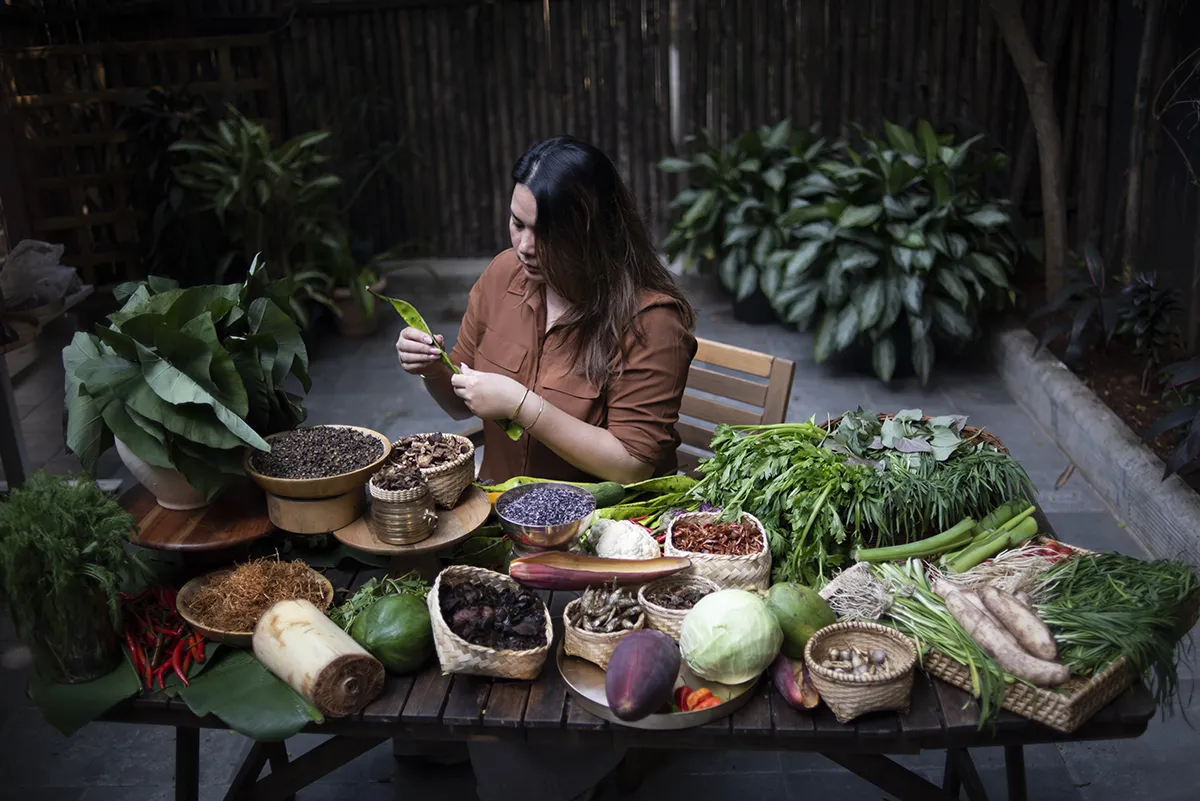
While I was shooting this for Lin Laishram’s Manipur cloud kitchen, the word abundance stayed with me the whole time. I’ve heard it often, but here, it felt different, more honest. At some point, I stopped trying to control the frame. I just let it be. Because the story of abundance was already there in every texture, every movement, every small detail I didn’t want to interrupt.
I was born and brought up in a small village in Madhya Pradesh. Photography was never something I planned—I moved to Mumbai for a job, and it was there that a friend first introduced me to a camera.
At the time, I was working a regular job, but I never really felt connected to it. Around the same period, there was a recession and the company shut down. It was an uncertain phase, but also the first time I allowed myself to think differently about what I wanted to do.
I decided to try working on my own, with photography, even though I didn’t fully know where it would lead. Over time, it slowly became something more than just a skill—it became a way of seeing and understanding people and moments.
What draws me most to photography is the chance to meet different people, each with their own stories. Every person, every place brings something new, and that keeps the process alive for me. I’m especially drawn to the emotional, quieter moments—the ones that feel real and unforced.

These photographs are less about capturing people, and more about holding onto something real, even if it lasts just for a second.
For me, photography has never been about creating something new—it has always been about noticing what already exists. Across different places, people, and moods, I find myself drawn to the quiet moments in between—the ones that are not performed, not rushed, not trying too hard to be seen.
Whether it’s someone sitting by a window, preparing before stepping on stage, working with their hands, or simply existing in their own space—there’s always a point where everything softens and becomes honest. That’s the moment I wait for.
While shooting, I’m not just thinking about composition or light—I’m thinking about how the moment feels, and how little I can interfere with it. Each image in this series comes from that space of trust—between me, the subject, and the environment we’re in.
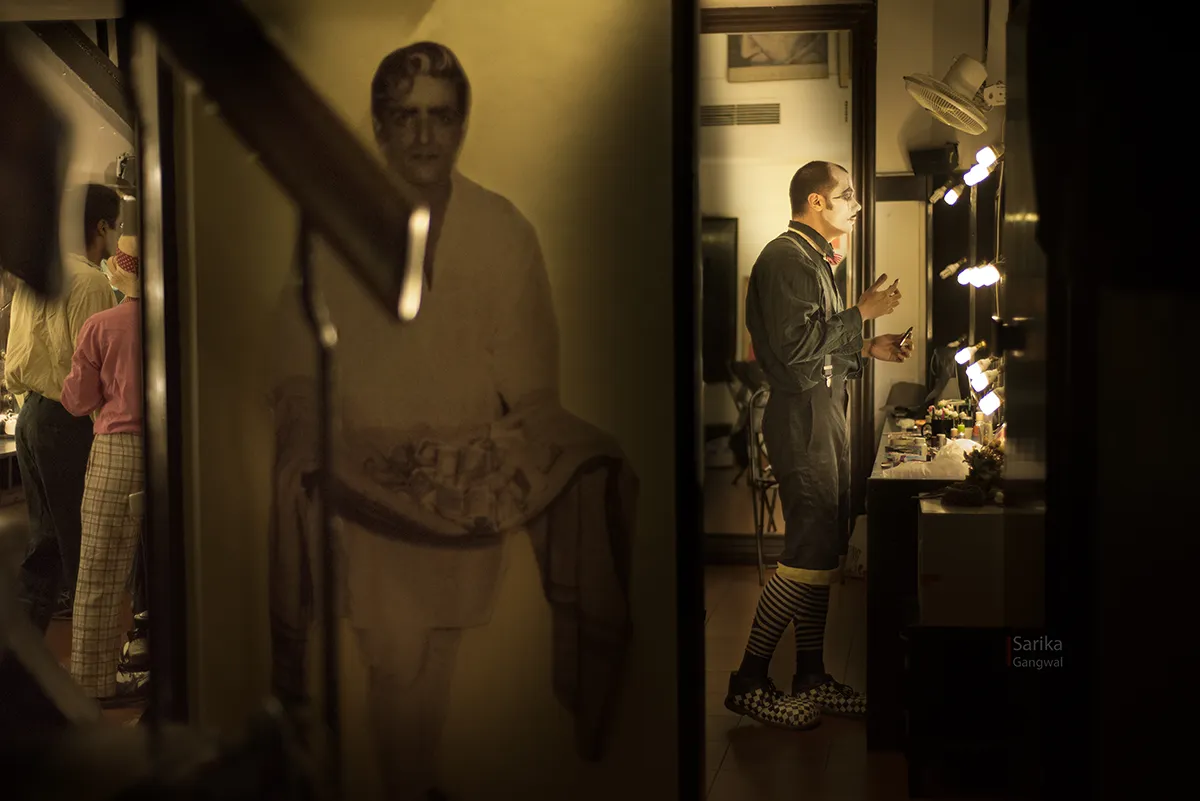
I took this backstage at Prithvi Theatre during one of Rajat Kapoor’s plays. The green room had that quiet kind of chaos—people moving around, getting into costumes, checking lines, small conversations happening in corners.
This artist stood there for a while, just in front of the mirror, slowly getting ready. Not rushed, not dramatic just focused. What stayed with me was how normal it felt. Like getting ready for anything important in life.
There’s always this small moment before stepping out when you’re still yourself, but also about to become something else. I think that’s what I saw here. Not the performance, not the character, just that honest pause in between.
I didn’t want to interrupt it, so I just took the frame and let it be.
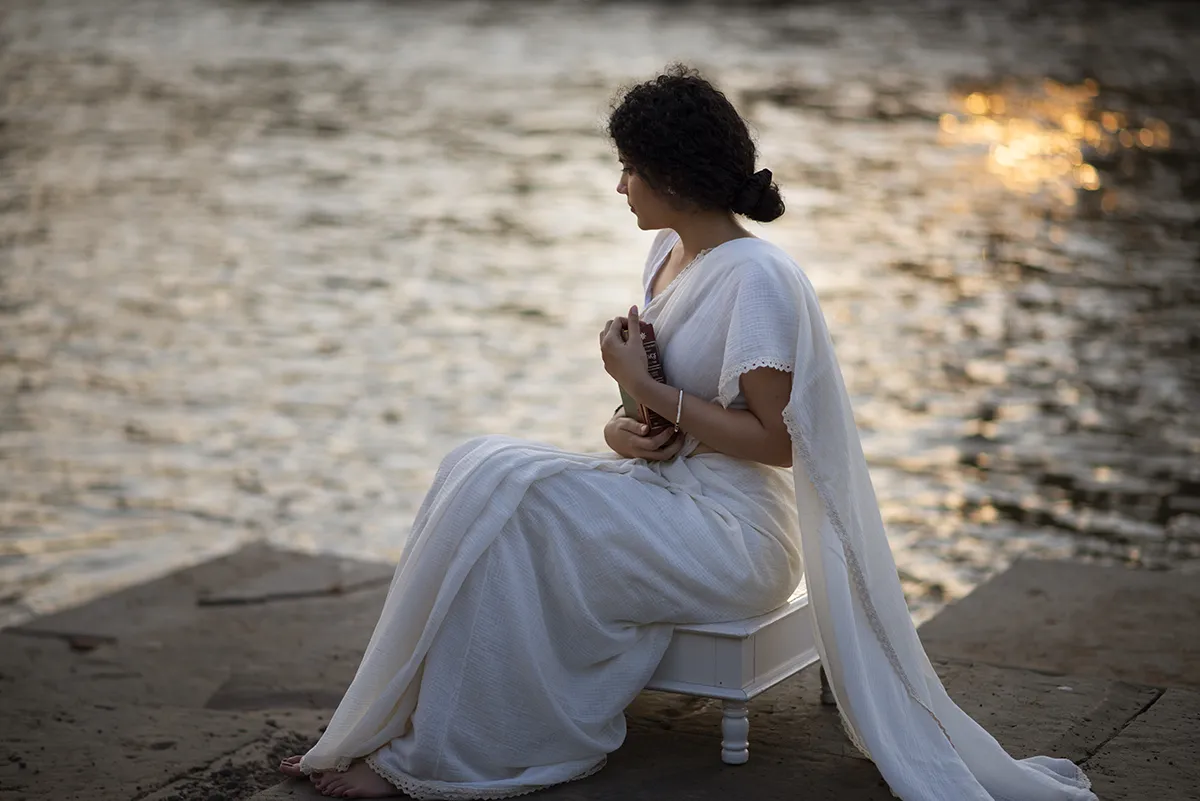
While shooting this, I remember thinking how easy it is to overdo things—especially with fashion. Bigger setups, more styling, more control. But standing there by the river in Satara, it felt unnecessary.
The saree was so simple, it almost asked to be left alone. And she didn’t need direction either; she just sat there, holding that book, completely at ease in her own space.
At that moment, my only thought was: don’t interfere. Let the light fall the way it wants to. Let the fabric move naturally. Let her just be.
Sometimes as a photographer, the hardest thing is to step back and trust the moment. This was one of those times where doing less felt right and the frame quietly came together on its own.
The Quiet between Two Meetings
I first met Tuya in the kind of noise where nothing real is supposed to happen—a friend’s party, full of half-heard conversations and borrowed laughter. But somehow, in the middle of all that chaos, there was a pause. And in that pause, we noticed each other. No effort, no intention—just a quiet understanding that felt oddly familiar.
Days later, the city repeated the coincidence. A coffee shop, sunlight spilling through glass, and there she was again—like the story hadn’t quite finished writing itself. This time, she asked me to photograph her. No makeup, no staging—just her, exactly as she exists when no one is trying to look a certain way.
This frame was never about posing. It was about the moment she stopped performing—when the light touched her gently and she leaned into herself, as if the world had stepped out for a second. Sitting there, wrapped in her own thoughts, she looked less like someone being photographed and more like someone remembering who she is.
I didn’t direct this. I just witnessed it.
“Some people don’t enter your life loudly—they arrive like a pause you didn’t know you needed.”
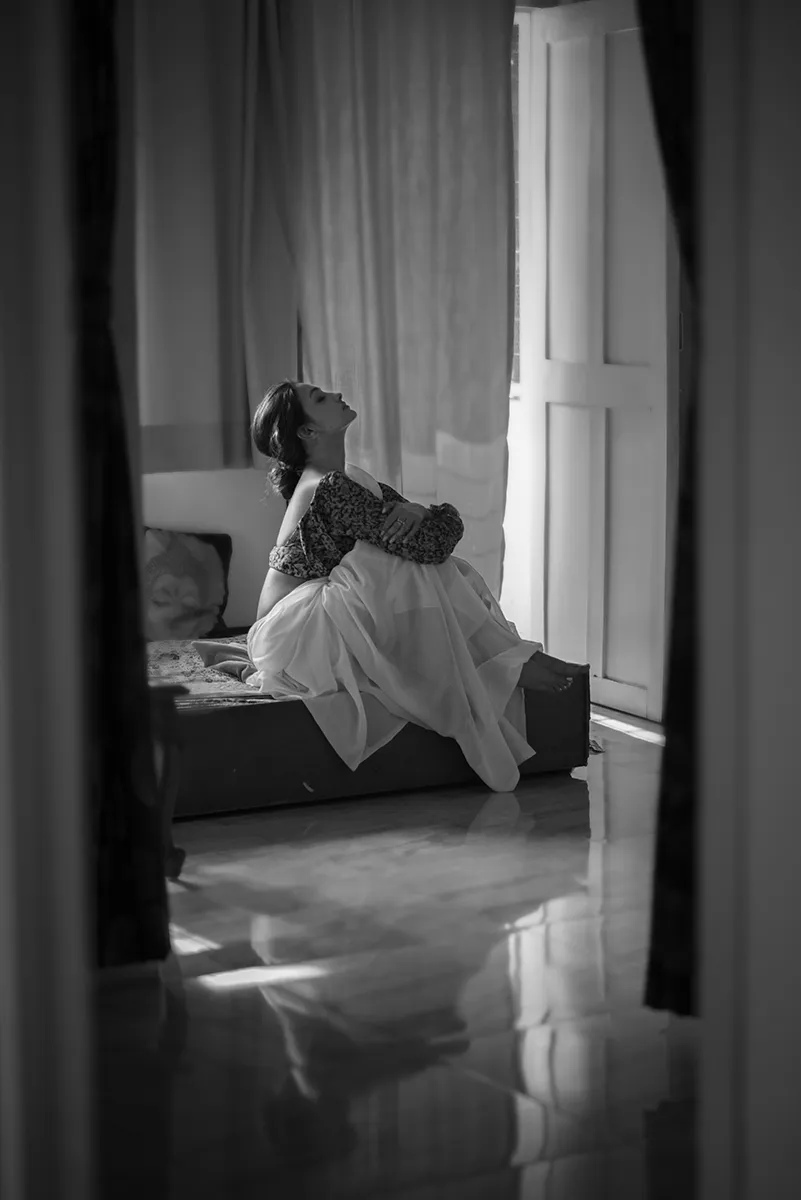
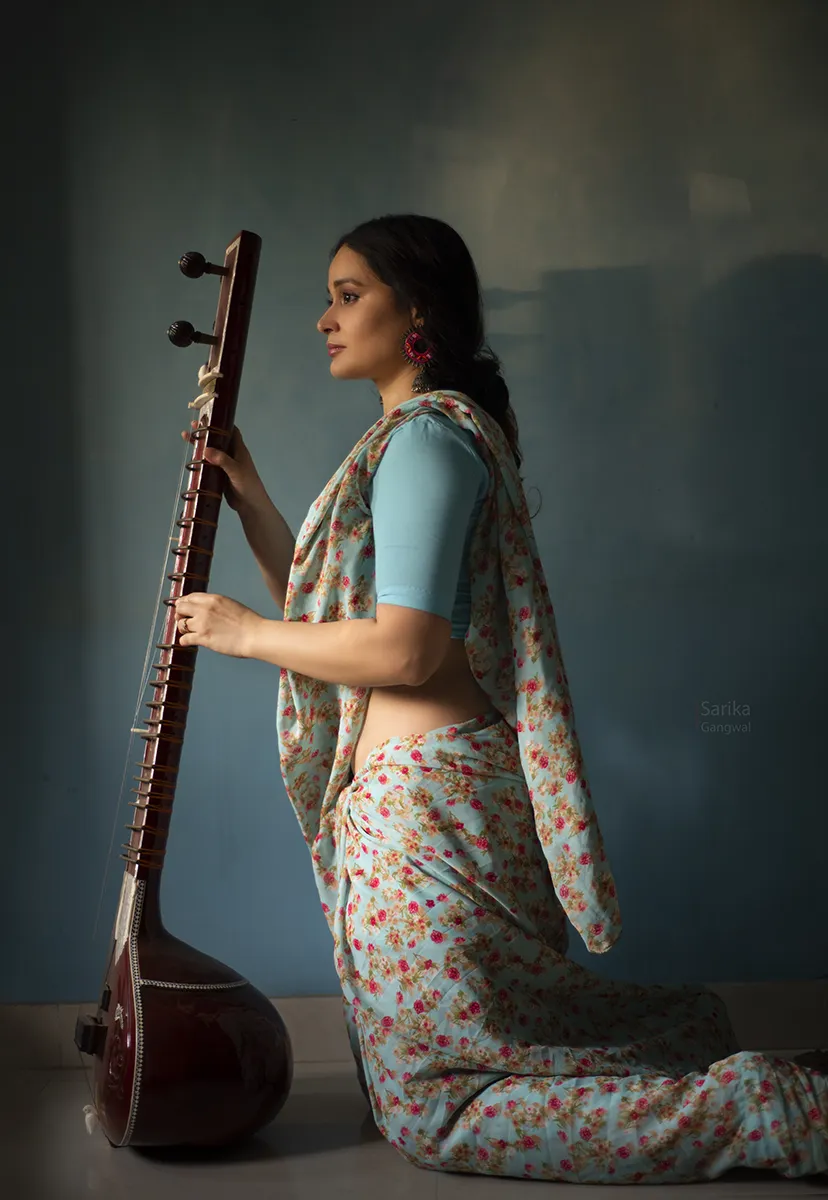
While I was shooting this with Swati, I remember feeling a kind of quiet I don’t usually notice. The room wasn’t silent, but it felt still. And she was just there, holding the tanpura—not playing it, not performing—just present with it.
I kept thinking about that moment before the music begins. When everything is ready, nothing has started yet. There’s a softness in that pause, something very personal, almost like a breath you don’t want to disturb.
I didn’t want to overcomplicate the frame. Just let her sit with it, let the light fall the way it was, and slowly build the image around that feeling. There was something very honest in the way she held herself calm, grounded, not trying to be anything more than the moment.
While clicking, I think I was just trying to hold onto that feeling for a second longer.
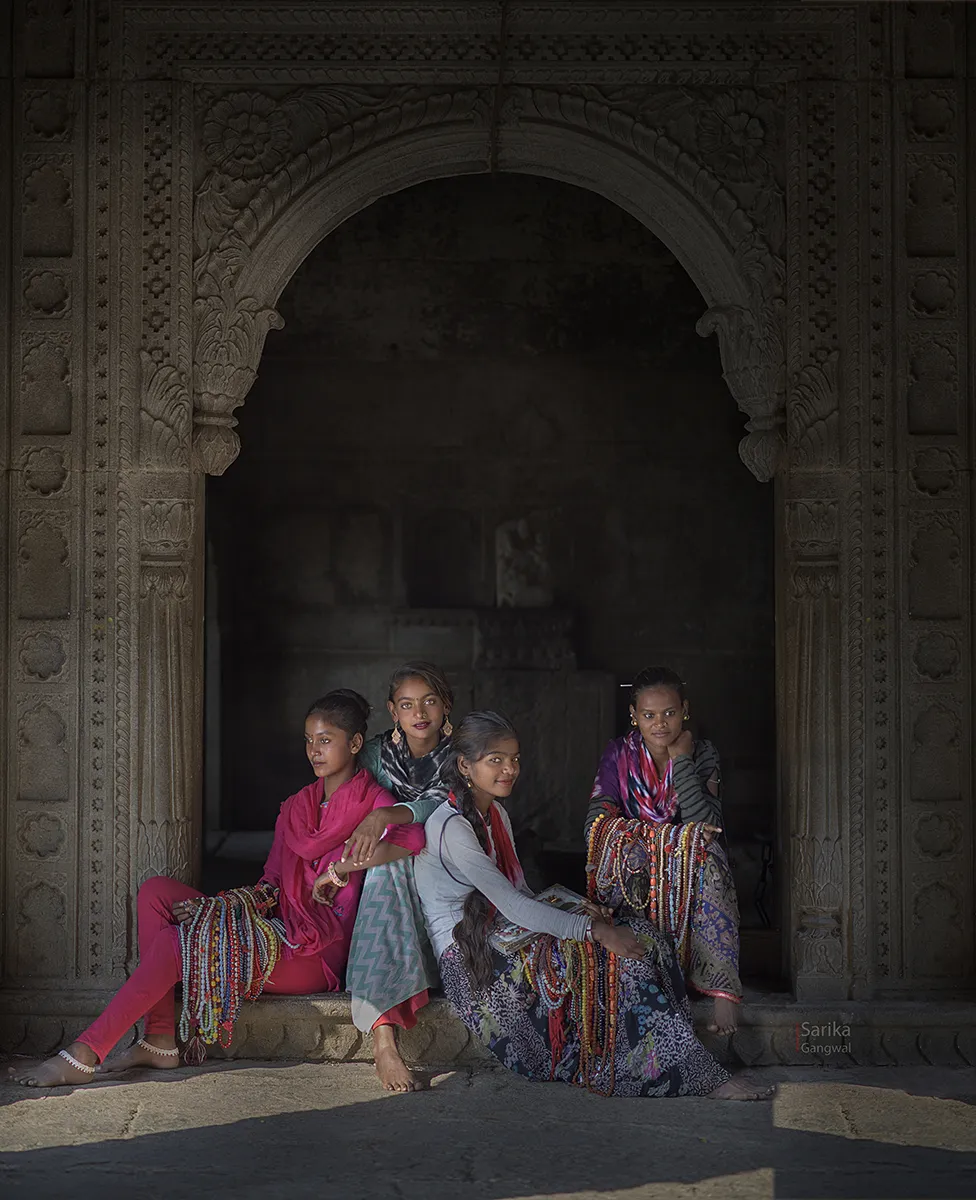
I shot this in Maheshwar in 2020. These girls were sitting by the old stone structure, selling pearl malas surrounded by so much color that it almost felt unreal against the muted walls. I remember noticing them from a distance and knowing there was a frame here, I just had to bring it together.
When I approached them, there was an instant ease. I guided them slightly where to sit, how to come closer but what stayed with me was how naturally they held themselves. There was no stiffness, no overthinking. They understood the camera in their own way.
While shooting, I kept thinking how rare that is to not have to build confidence in a frame, but to simply shape what’s already there. One of them, Monalisa, sat in blue with a quiet presence, blending into the moment without trying to stand out.
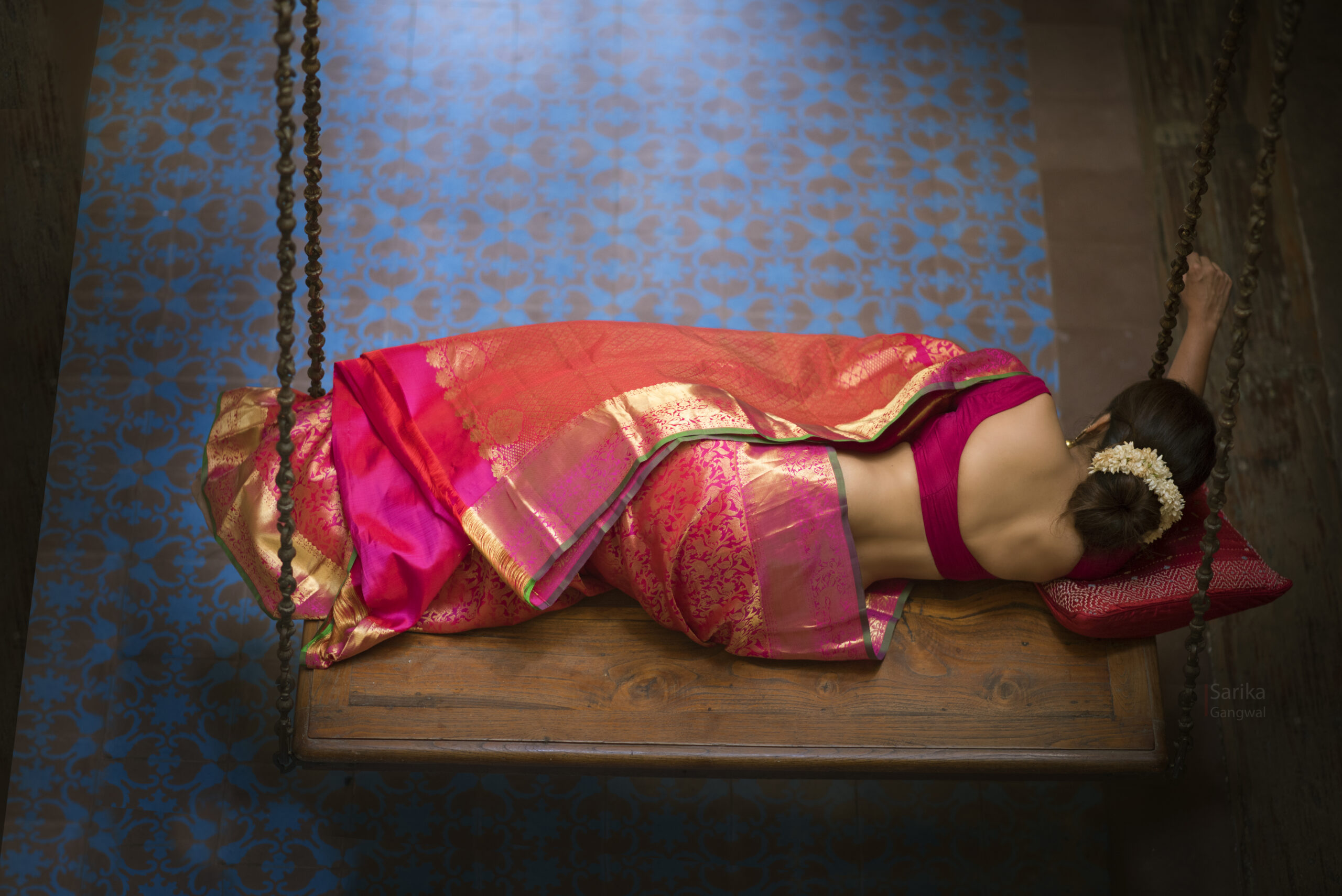
I’ve shot with Kshama many times, but this frame has stayed with me in a different way. We were in one of the old French havelis in Ahmedabad spaces that already carry a certain quiet beauty. But what I remember most wasn’t the place, it was how easy everything felt that day.
When you’ve worked with someone enough, there’s a kind of understanding that builds without saying much. I didn’t have to explain too much to her. I just suggested the idea, the frame, the stillness—and she slipped into it so naturally.
She lay there on the swing, completely at ease, not trying to perform, just trusting the moment. And I remember thinking how rare that is to reach a point where the camera doesn’t feel like an interruption anymore.
While clicking, I wasn’t chasing anything. I was just trying to hold onto that comfort, that familiarity between us.
Some images stay not because they are perfect, but because they feel like home.
Related Articles
Related
When Color becomes Emotion
by Rupesh Aravind
The Human Element in Nature
by Neelima Azad
Solitude
by Raju Alexis