
Wings over Concrete
Raghuvamsh Chavali
April 28, 2026
Raghuvamsh Chavali is an Award Winning Canada based visual artist and photographer whose work explores the evolving relationship between nature and the built environment. With over a decade of practice, he is known for creating concept-driven imagery that captures movement, pattern, and coexistence within modern urban landscapes.
Chavali’s photographs have been featured in leading international publications including The Guardian, Smithsonian Magazine, Canadian Geographic, BBC Sky at Night, and National Post. His work has also been exhibited globally across juried exhibitions and photography festivals, earning multiple international awards.
Beyond his artistic practice, he contributes to the photography community through writing and thought leadership on visual storytelling and technique, and serves as an ambassador for 1x.com, a highly curated global photography platform.
Through his work, Chavali continues to document a quiet but powerful narrative, one where nature does not disappear, but adapts, persists, and reshapes the spaces we build.

I wasn’t looking for dramatic moments. I was looking for small, quiet interactions between birds and the environments we have built. Over time, those moments started to feel more meaningful. Not because something extraordinary was happening, but because it kept happening everywhere.
Every year, more than a billion birds die because of buildings made by us.
It’s a number that is easy to read and forget. But once you start noticing birds in cities, it becomes difficult to ignore. You begin to see how often they are forced to move through spaces that were never designed for them.
This series began with that awareness.
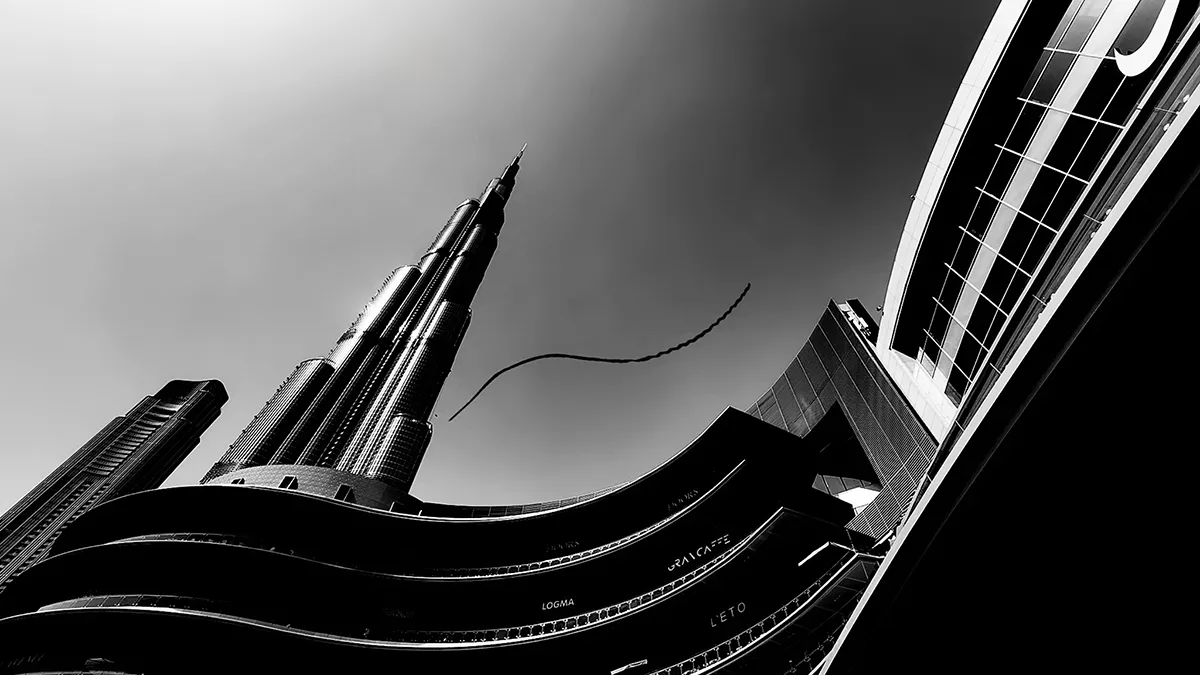
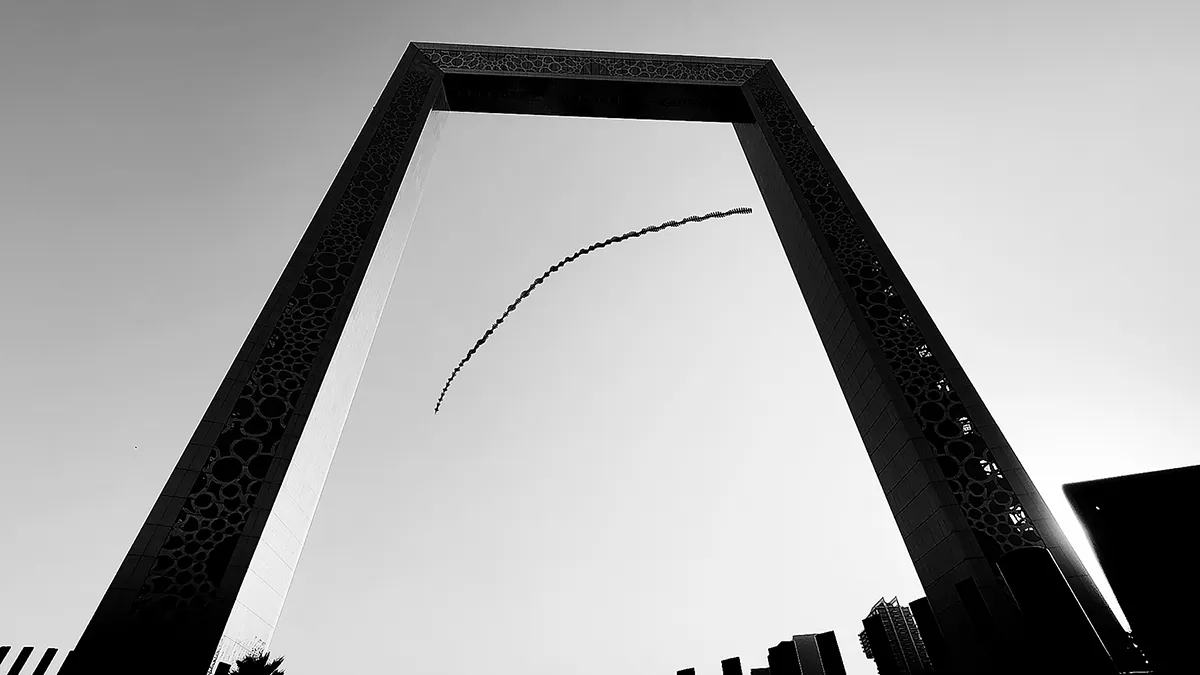
The images in Wings Over Concrete are taken across very different places. In Dubai, birds move across the height of the Burj Khalifa and pass through the open structure of the Dubai Frame. In Ajman, they fly around unfinished buildings that are still in the process of becoming part of the skyline. In Hyderabad, near Charminar, they move through a space that has carried history for centuries. In Pula, inside an ancient amphitheatre, their movement quietly replaces what used to be a place of spectacle and conflict
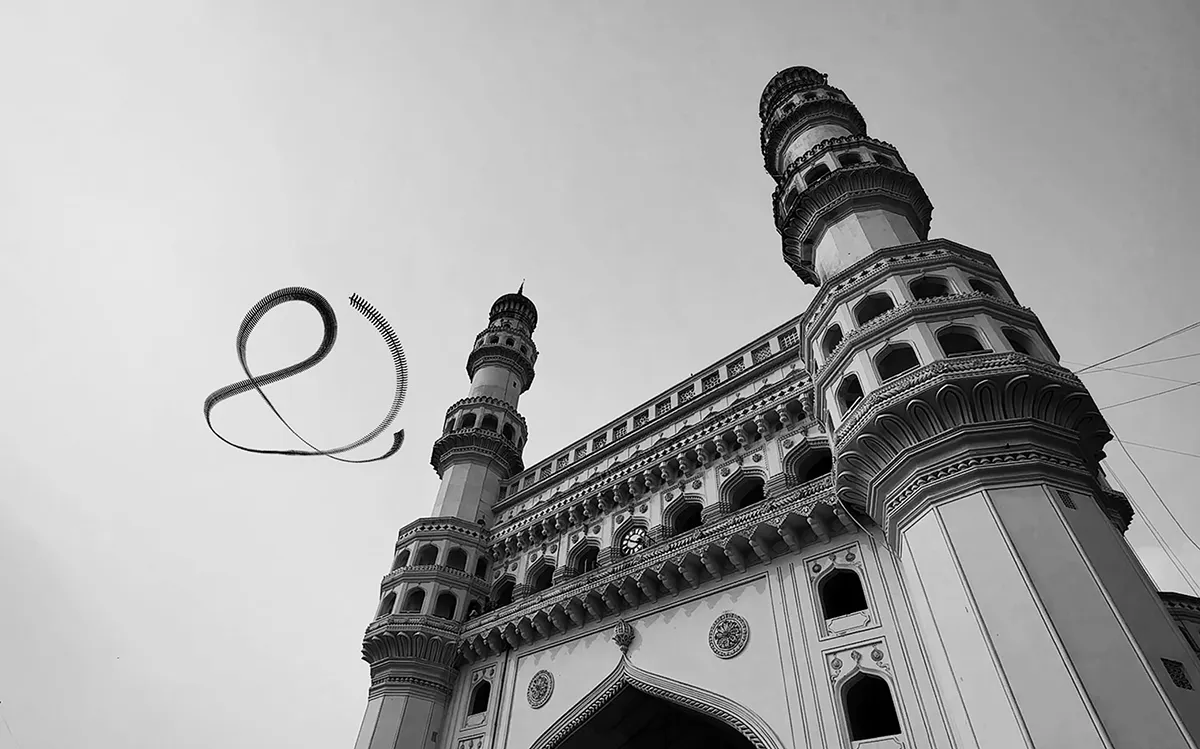
These locations are very different from each other, but the experience of watching birds in them feels similar.
The buildings are still. They are heavy, defined, and permanent. The birds are the opposite. They are constantly moving, changing direction, forming and breaking patterns in seconds. For a brief moment, both exist in the same frame, but they do not belong to the same system.
Most of these photographs are taken from the ground, looking up. That perspective is important to me. It makes the buildings feel larger and more dominant, while the birds appear smaller and more fragile. But at the same time, the birds are the only element that is truly alive in the frame. They interrupt the straight lines of architecture and bring a sense of unpredictability into controlled spaces.
There is also an element of chance in how these images are made. I cannot control how the birds will move. I can only wait, observe, and respond. That unpredictability is what draws me to this work. Every frame feels like a small collaboration between intention and accident.
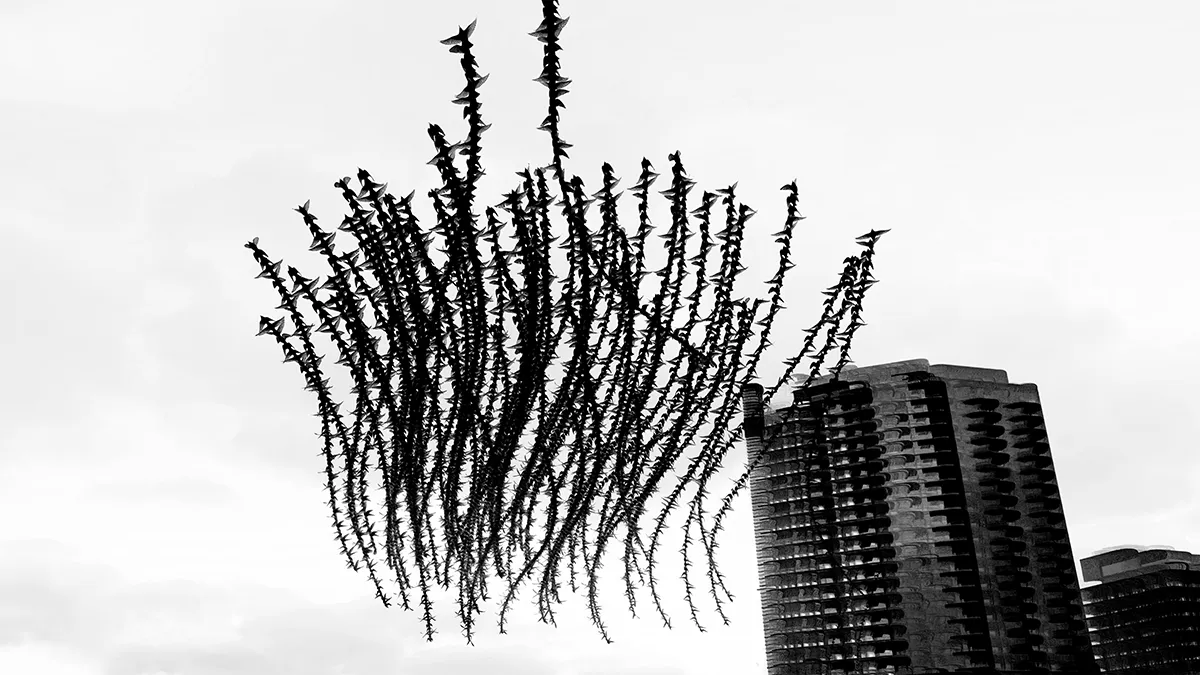
Alongside this, I have been exploring another approach through a body of work I call Interlacing Frames. In this, I use several videos to capture the birds movements and postprocess them. Instead of presenting a single, clear moment, the image splits and overlaps, as if multiple versions of the same scene exist at once.
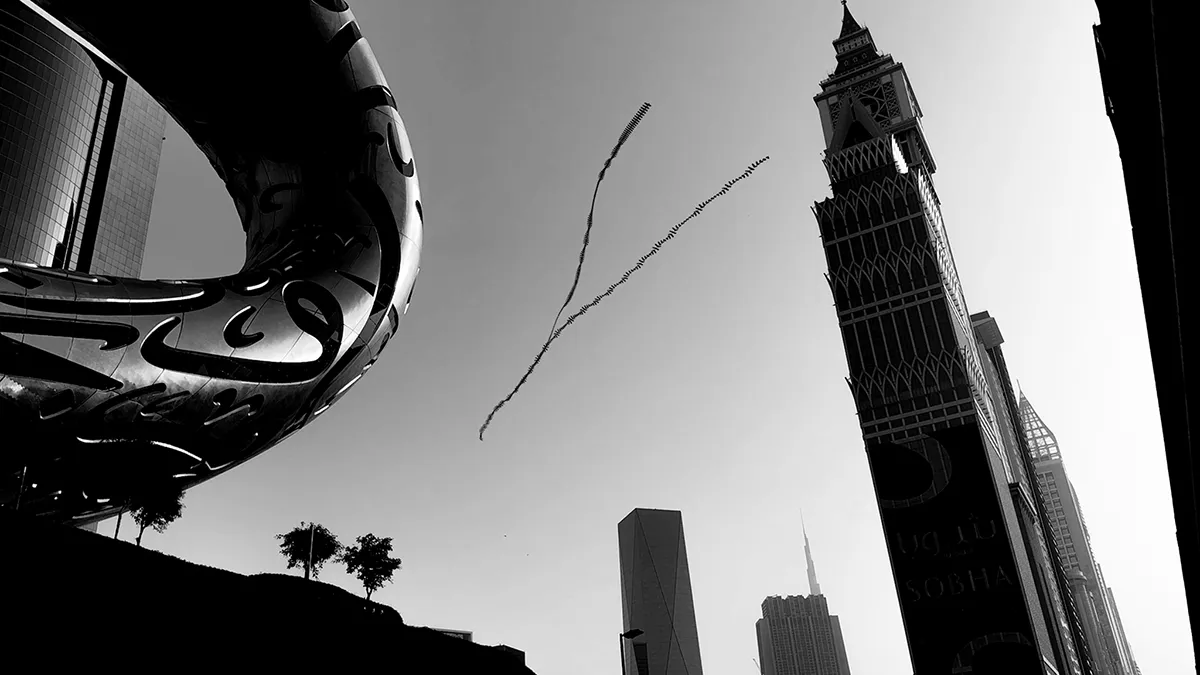
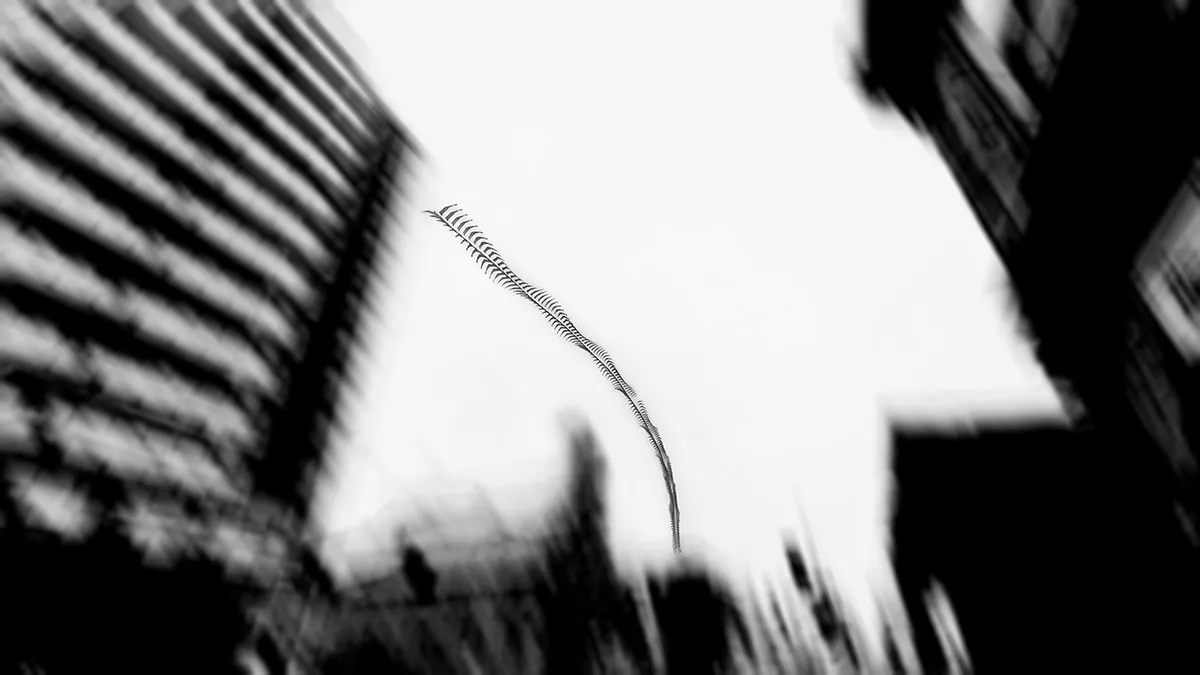
While Wings Over Concrete focuses on real movement in physical space, Interlacing Frames explores how perception itself can shift. Both bodies of work come from the same place of curiosity. One looks at how birds navigate the world we have built. The other looks at how we see and interpret that world.
Together, they are different ways of questioning what feels fixed.
Over time, working on this series has changed how I look at cities. What once felt like solid, permanent structures now feel more temporary when seen against constant movement. The birds are not trying to challenge the buildings. They simply continue to exist around them, adapting in ways we often overlook.
This work is not trying to give answers. It is simply asking us to notice.
Because even in spaces shaped entirely by human ambition, something else is always present, moving quietly through it.
And maybe that is enough to remind us of one simple thing.
“The skies do not belong to the buildings.”
Related Articles
Related
Building Neon Worlds
by Daniel Cheong
Closing Time
by Frank Myers
Interpreting the Landscape
by Vin Singh