
Closing Time
Frank Myers
April 18, 2026
Frank Myers lives in Burlington, Canada. He took up photography as a young adult, but now retired, he describes photography as his “full-time hobby.”
He especially loves landscapes that capture the magic that can happen when land, sky and water meet. He is also fascinated by the passage of time and the tension between beauty and decay. However, his most satisfying work often involves photographing people, especially in environmental portraits.
Frank enjoys controlling the creative process from start to finish, producing his own archival fine art prints. His work has been featured in solo shows and is regularly seen in juried exhibitions at galleries all over the Ontario.

Perhaps it’s a sign of the times we’re living in, but I find myself increasingly taking note of what I would call dystopian scenes.
These are different from the abandoned places I’ve photographed for years. In abandoned places, I feel the passage time, the tension between beauty and decay, and the sense of the lives once lived there.
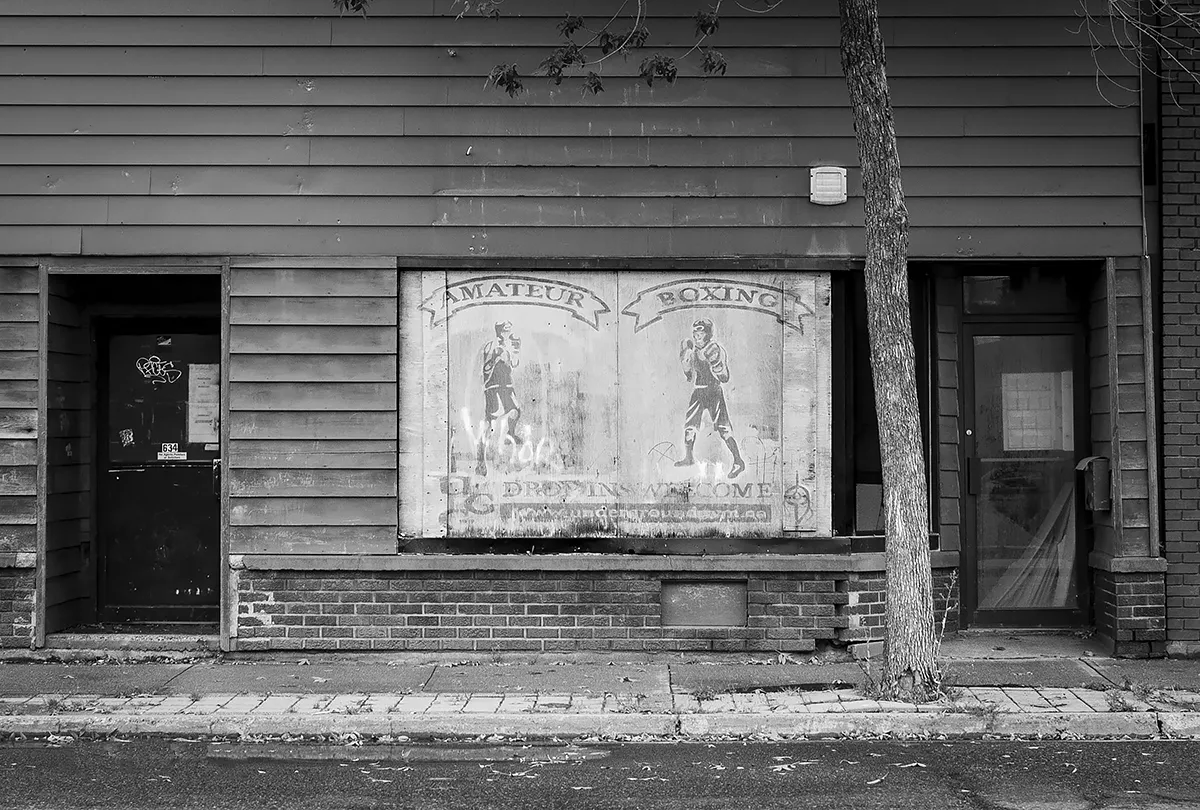
This is different. It’s those gas stations, motels and restaurants that have met their demise in recent years or appear ready to do so soon. They’re not heavily vandalized, covered with graffiti or ready to fall down. Sometimes there’s little difference in appearance between a business that’s still in operation and one that has been closed for 5 or 10 years.
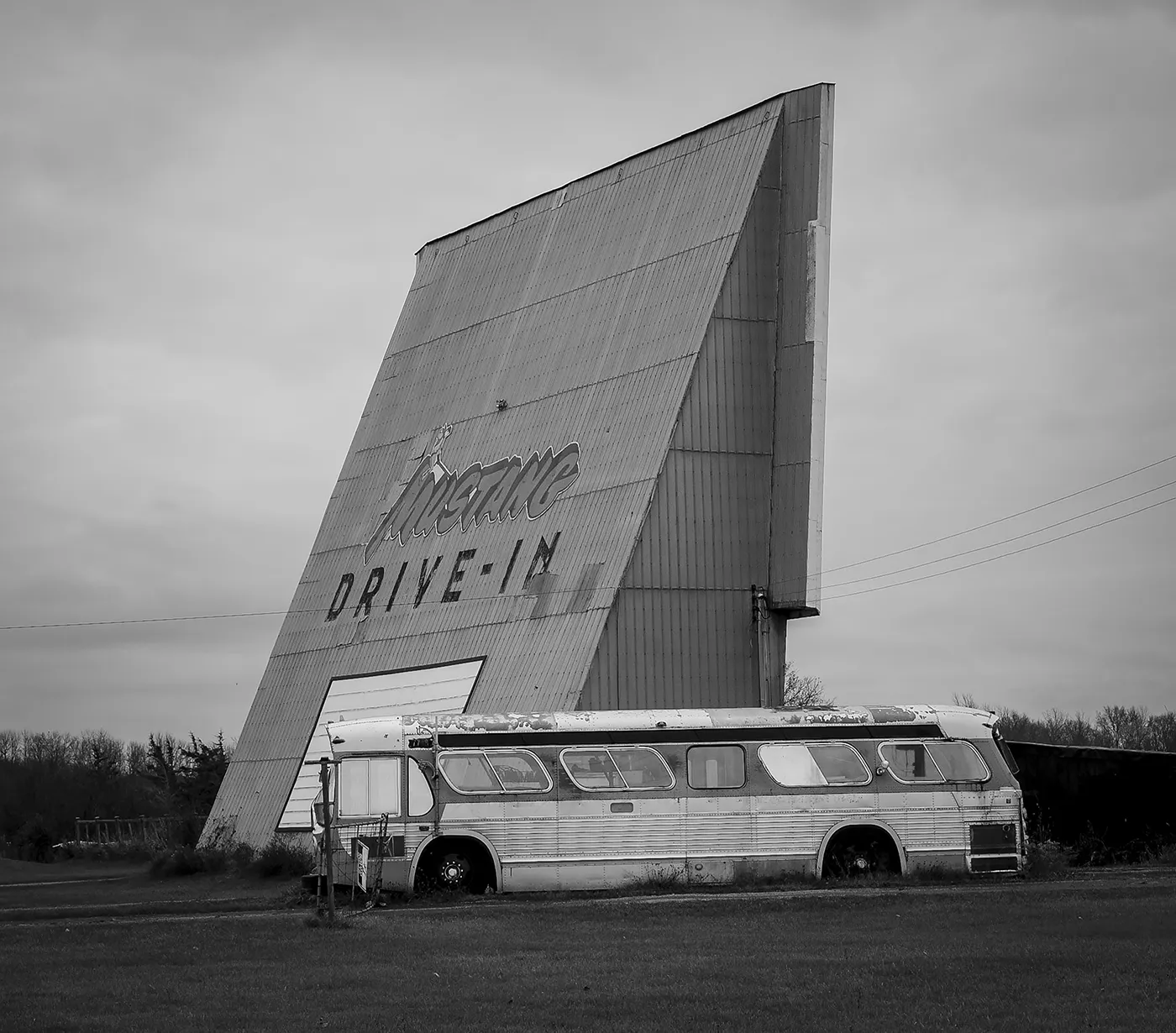
The history of drive-in theatres in North America parallels the growth of the automobile industry, until popularity peaked in the 1950s and 1960s. Drive-in movies offered both a popular family outing and a date night option. Although a few still operate, today abandoned drive-in movie theatres dot the landscape of Canada and the United States. The Mustang Drive-in near Bloomfield, Ontario is one of the few still operational, although it may not be obvious in the offseason.
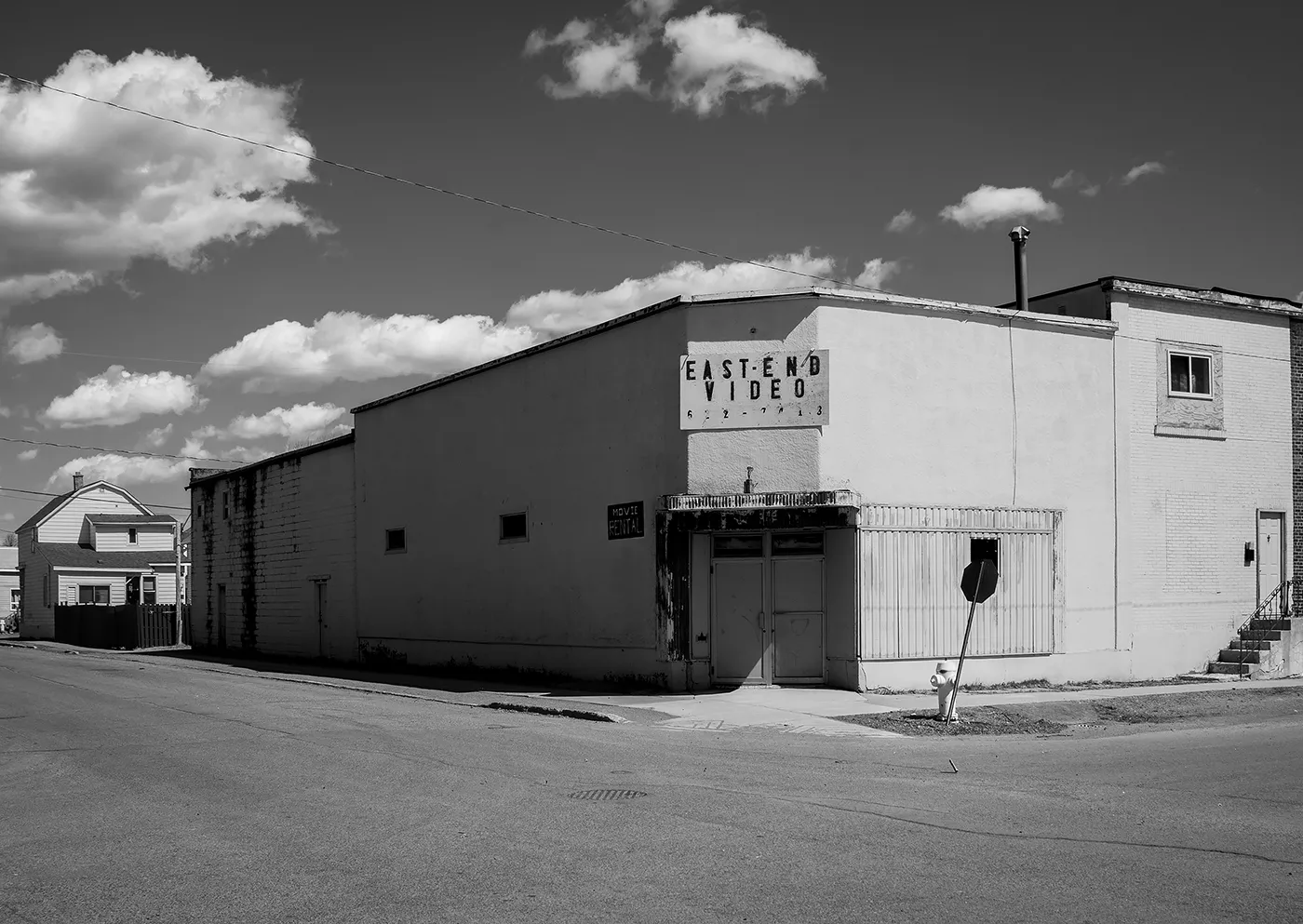
Video rental brought the movie theatre into the home, beginning in the 1980s with video tapes, followed soon by DVDs. The number of shops declined sharply in the 2000s, largely due to the advent of video-on-demand and streaming options such as Netflix and Disney. Although a few survive, most suffered the same fate as East End Video in Thunder Bay, Ontario.
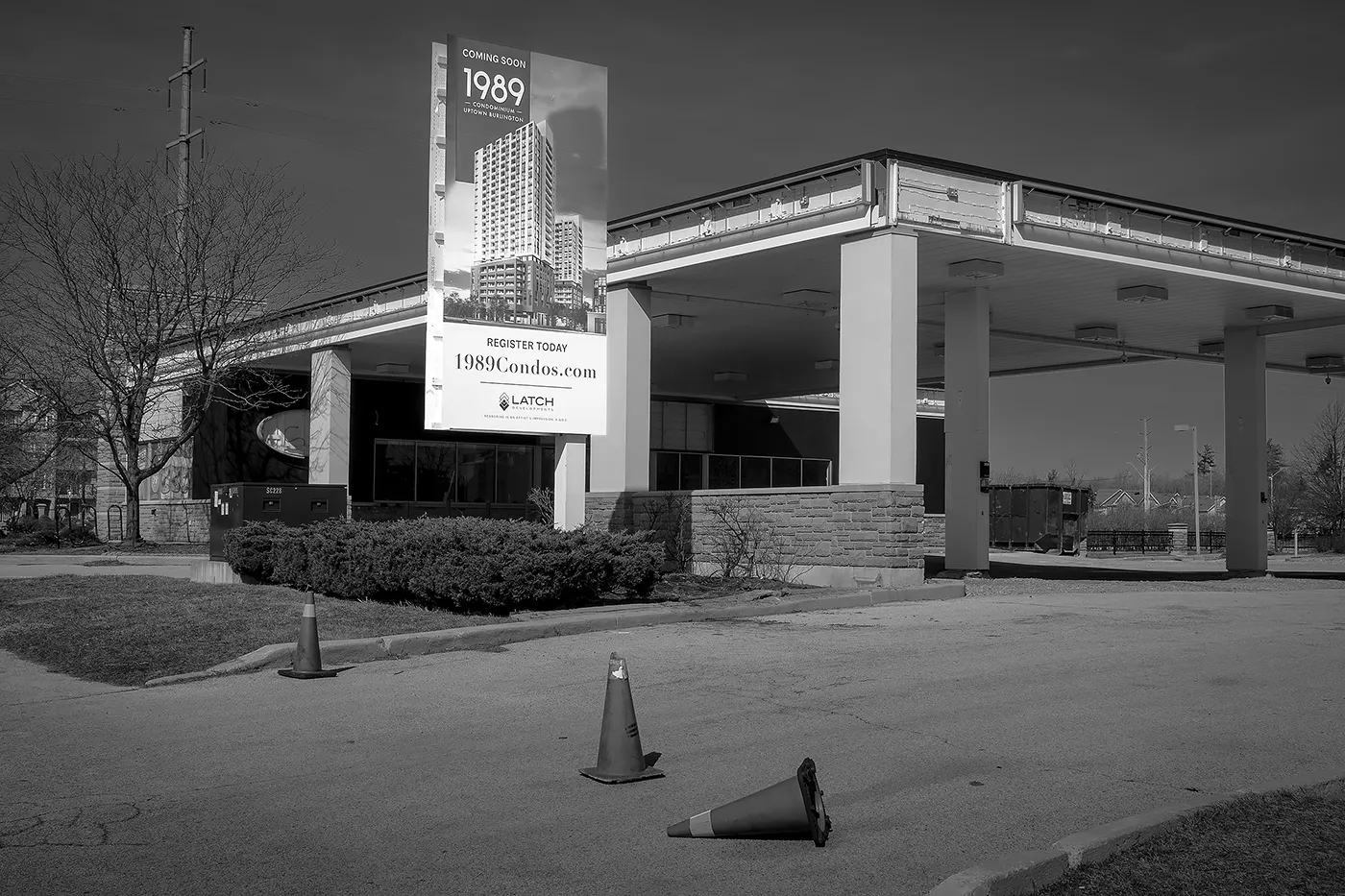
In my own neighbourhood a gasoline station where I purchased gas for years has closed, the property purchased by a developer planning to erect 17 and 22-floor condominium towers. Ironically, the collapse of the Toronto-area condominium market has caused this project to be cancelled. Now the station sits vacant behind signage promoting a cancelled condo project.
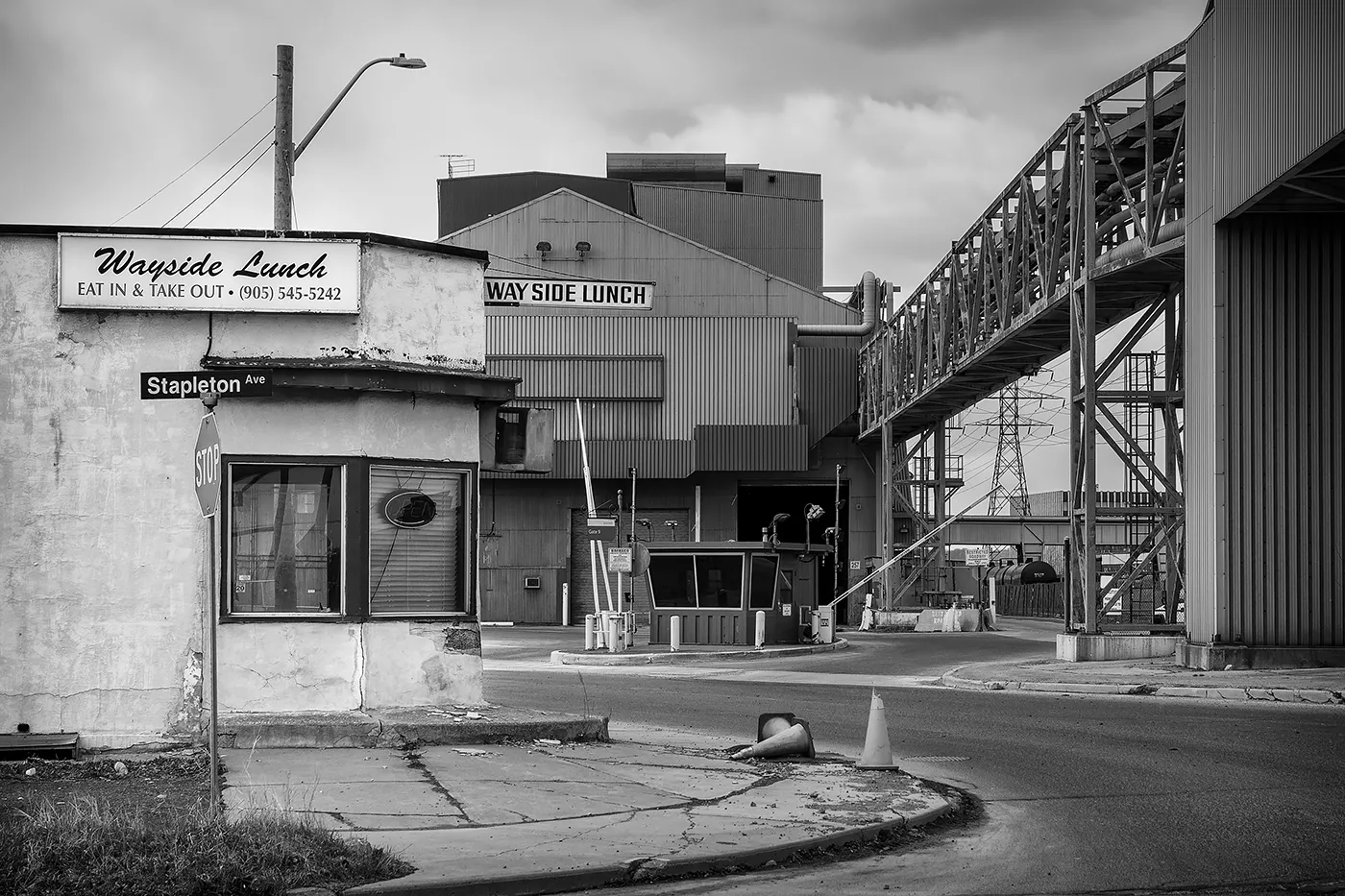
The production of steel began in Hamilton late in the late 19th century. Boom years followed until 60% of Canada’s steel was being produced there. By the 21st century, production had slowed for various reasons. The Wayside Lunch sat directly across from one of the Dofasco Steel plant gates. It’s easy to imagine workers dashing across the street to grab a quick lunch during the boom years. The diner did not survive the industry’s downturn, closing in 2024.
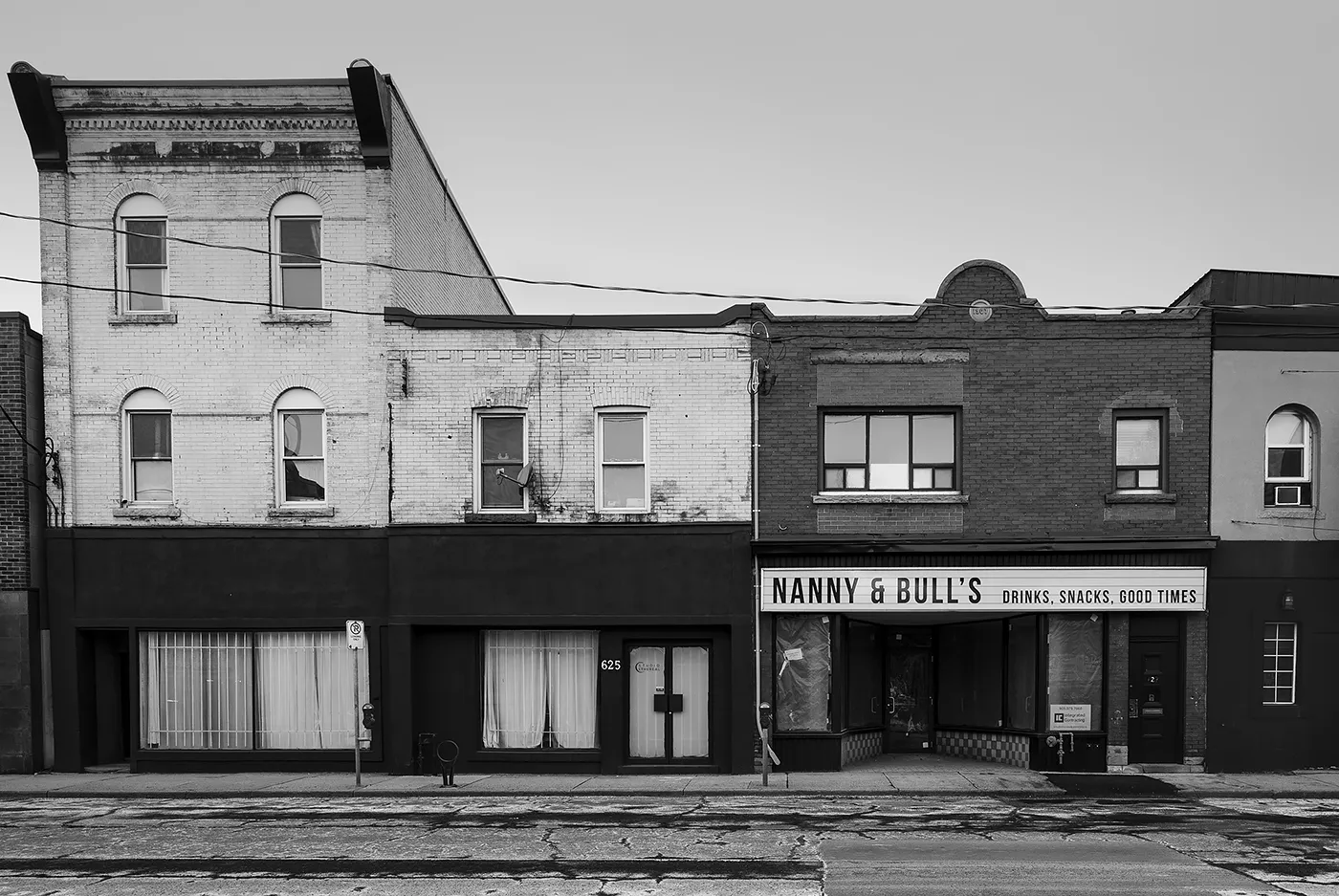
Small, friendly bars, often situated in neighbourhoods, were once common in cities and towns across Canada. Depending on what city or town you live in, these places are largely gone, replaced by establishments owned by large corporations. Each chain establishment (Kelsey’s, Shoeless Joes) is duplicated dozens of times with near identical décor and menu. As promised by the sign, there’s no doubt many good times were enjoyed in this spot located in Hamilton, Ontario.
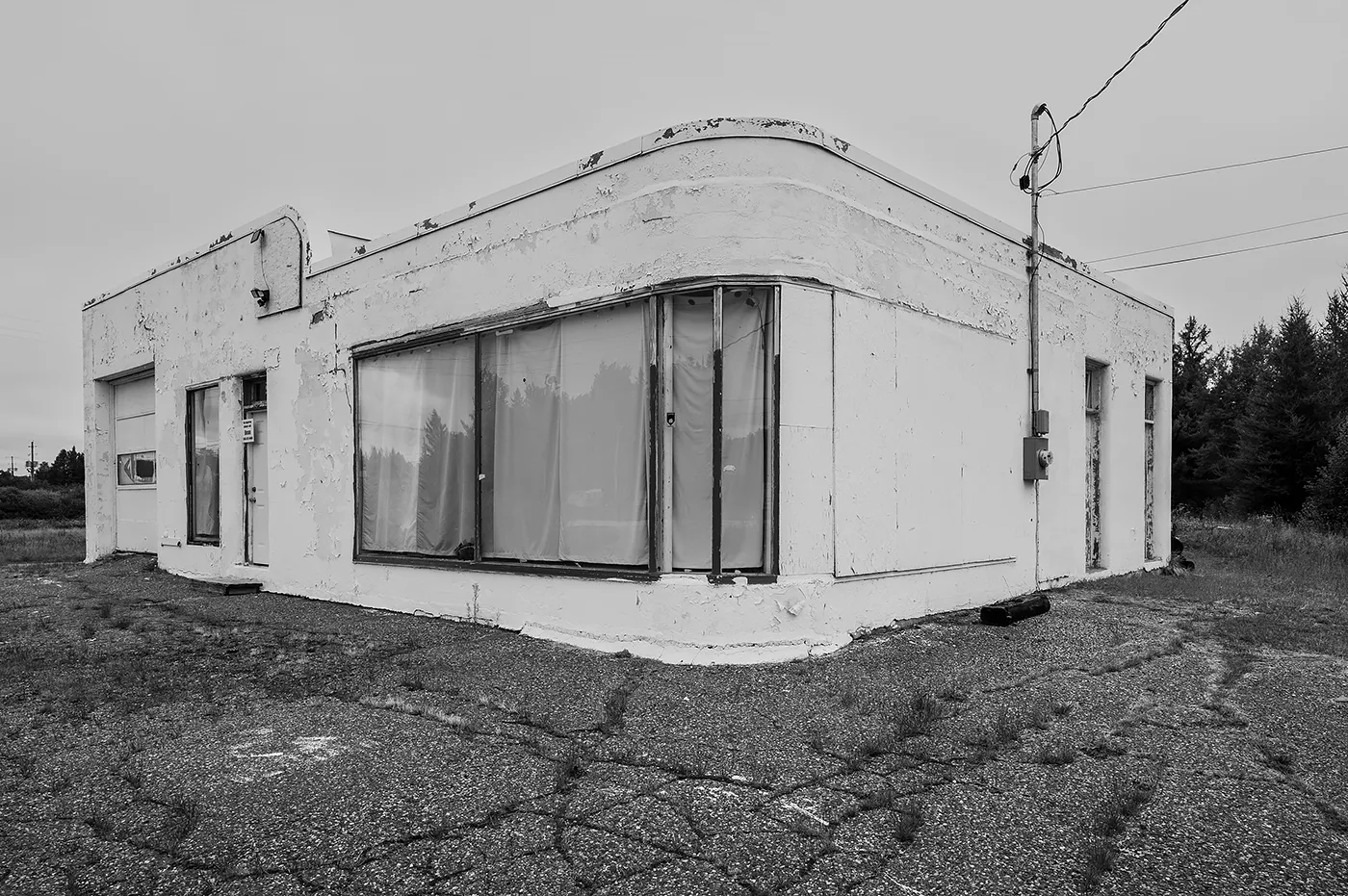
Canada’s highways were once lined with independently owned restaurants, motels and gasoline stations. Several developments led to their demise, perhaps most important were cars that could travel much farther between fill-ups. Filling stations once scattered along the highways were replaced by larger stations at major centres and junctions. Small motels were replaced by chain operations at those same centres. Tastes changed and travellers came to prefer the fare offered by McDonalds and Tim Hortons, also located at larger centres. This unidentified gas station survived until recent years but will soon disappear.
Something about these and similar scenes creates a sense of dystopia in me. I think it’s awareness of the transition from being there to being gone. It’s a sense that these businesses, once viable and perhaps popular, are being replaced by something else. That something else may be shiny and new but is it better? Often, it’s about a way of life disappearing.
Related Articles
Related
Interpreting the Landscape
by Vin Singh
Wings Over Concrete
by Raghuvamsh Chavali
Solitude
by Raju Alexis