
Interpreting the Landscape
Vin Singh
April 29, 2026
Being a graduate in the field of Physics, Vin Singh seeks and explores the beauty of the natural world. His work is primarily focused on landscape but doesn’t shy away from any subject matter. Vin’s work has been showcased in Photolife, B+W and Silvershotz magazines. Vin has received many local and international awards including “World Class Photographer of the 118th Toronto International Salon of Photography”.

What I capture in-camera, based on my preferred settings, looks nothing like what my eyes see in the moment. More importantly, the raw image bears little resemblance to what I remember of the scene—or how it felt to stand within it.
Standing in front of my work in a gallery or at an art show, one of the most common questions I hear is, “Did you Photoshop it?” This is often followed by, “You must have an amazing camera.”
Depending on the day, I sometimes respond—perhaps a little bluntly—that the image is “straight out of the camera.” But that answer is only partially true, and it doesn’t really address what people are trying to understand.
The digital processing stage is where the photograph begins to take shape as an interpretation rather than a record. It is here that I make deliberate choices about tone, contrast, and structure in order to express the experience of the landscape. The final printed image is not an accident; it is carefully and intentionally crafted to communicate something beyond the literal. Ultimately, it is meant to evoke a response.
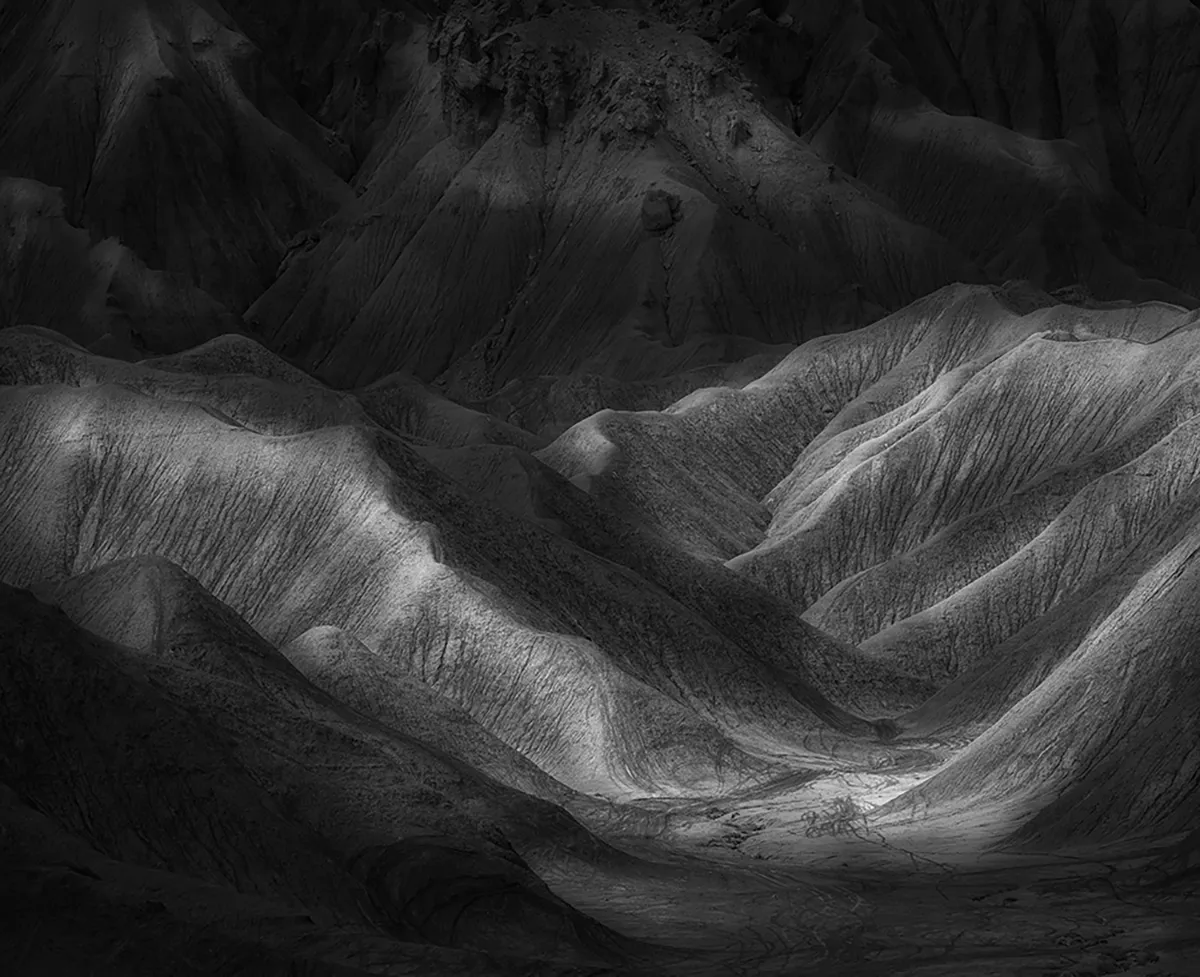
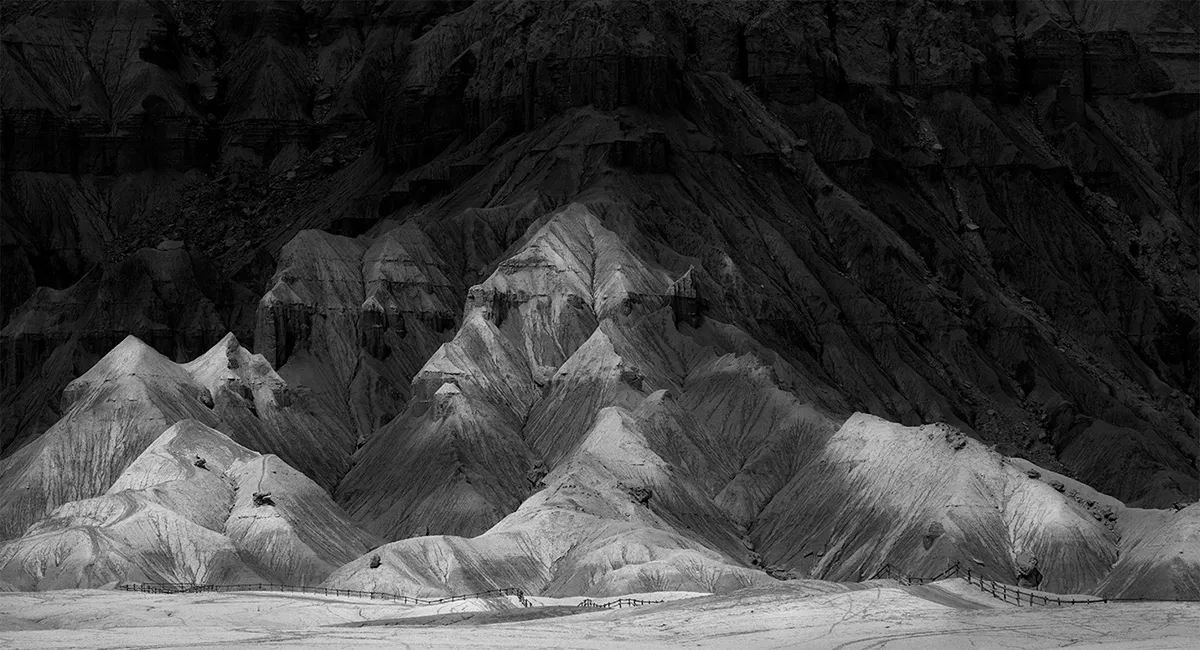
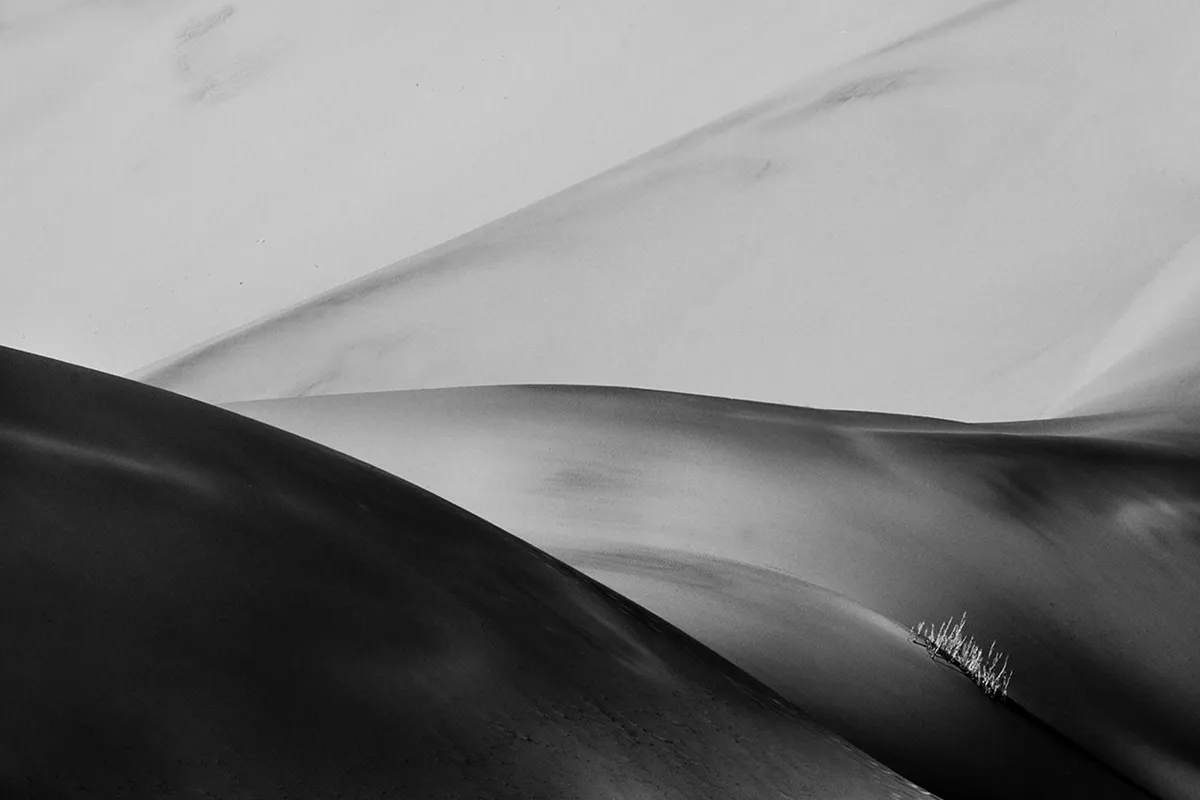
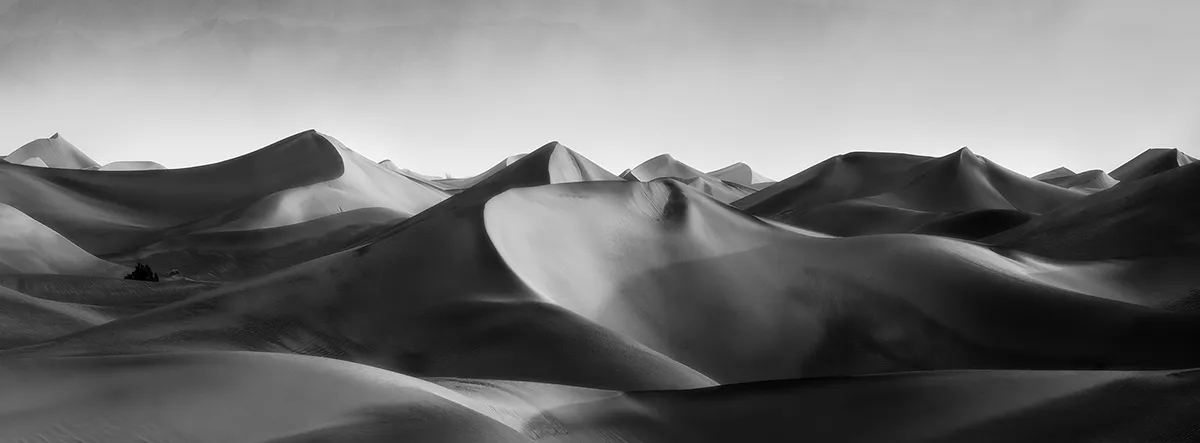
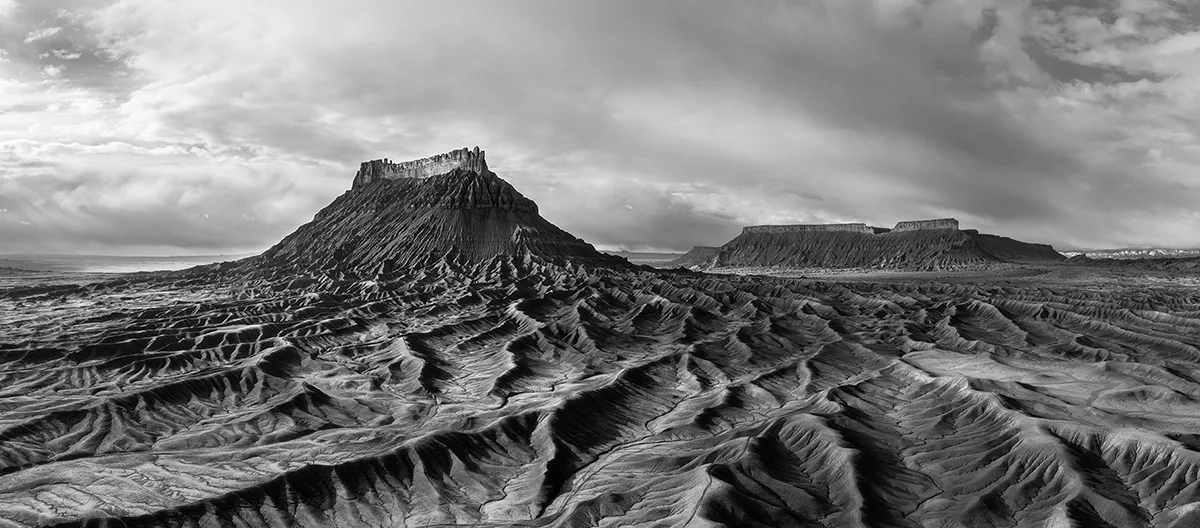
The images selected for this article are interpretations of the landscapes before me. I have chosen to present them in black and white, removing the question of “real” versus “enhanced” colour altogether.
Without colour as a distraction, the emphasis shifts to light—how it defines form, reveals texture, and creates lines of interest.
The rugged terrains of Arizona, Utah, and California lend themselves naturally to this approach. Their dramatic geology, shifting light, and stark contrasts offer endless opportunities to move beyond documentation and toward expression.

Related Articles
Related
Closing Time
by Frank Myers
Wings Over Concrete
by Raghuvamsh Chavali
Solitude
by Raju Alexis